
Lower Manhattan Since 9/11: A Panel of Leaders Looks Back and Ahead
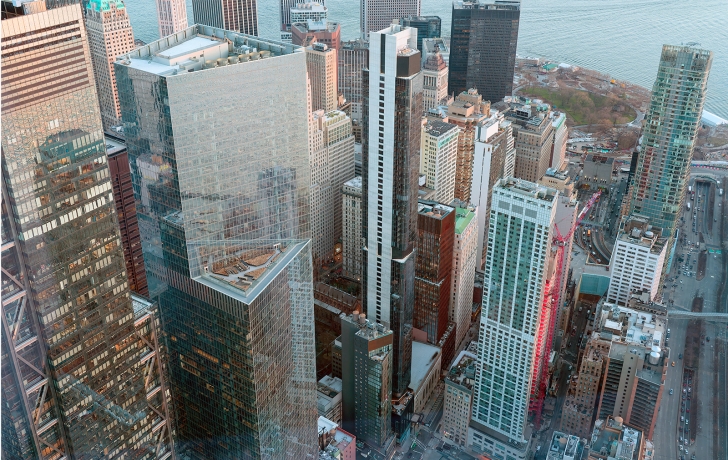
Through 9/11, financial downturns, Hurricane Sandy and the impact of COVID on the workplace, the resiliency of Lower Manhattan has been tested again and again. Photo: Carl Glassman/Tribeca Trib
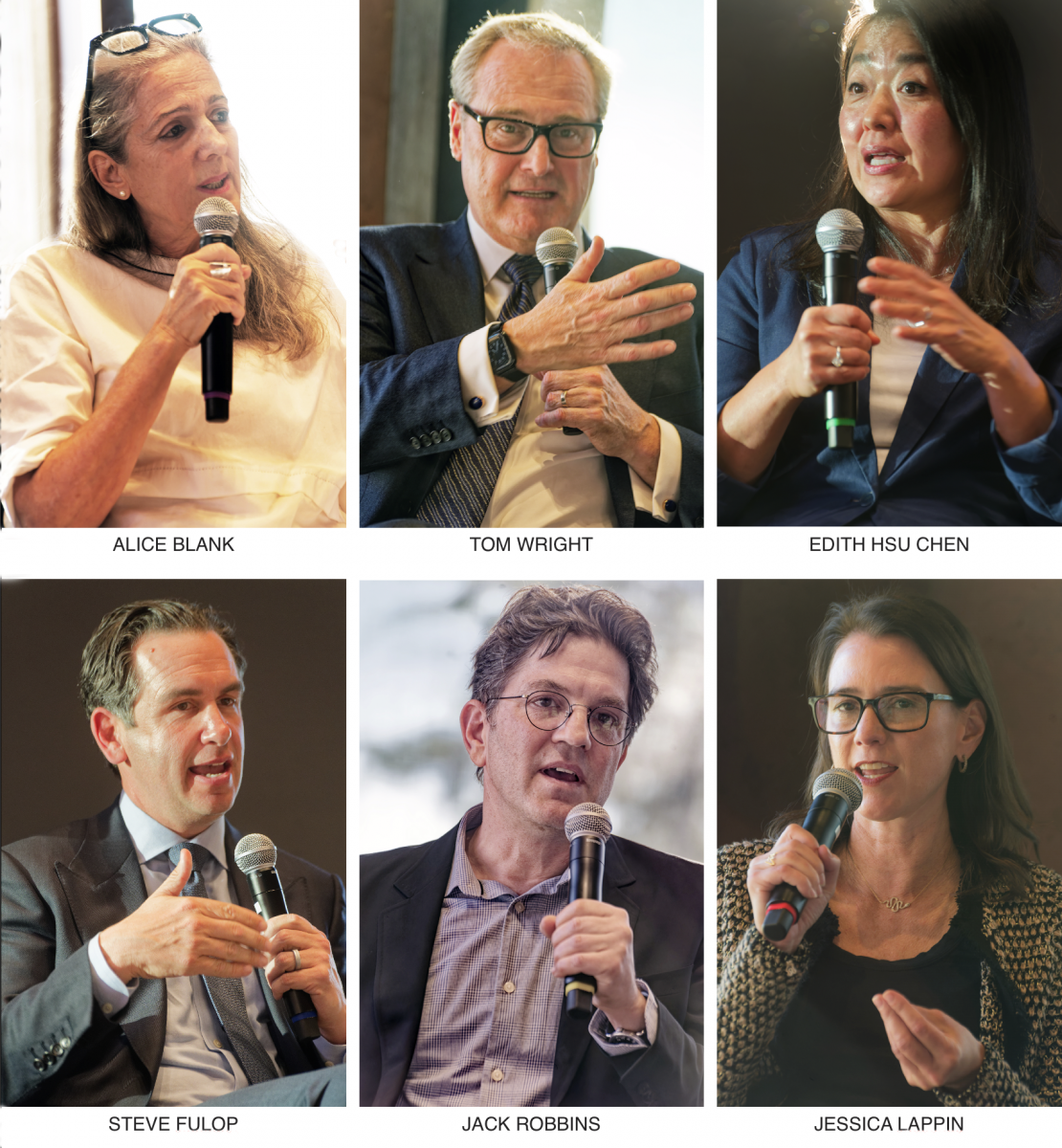
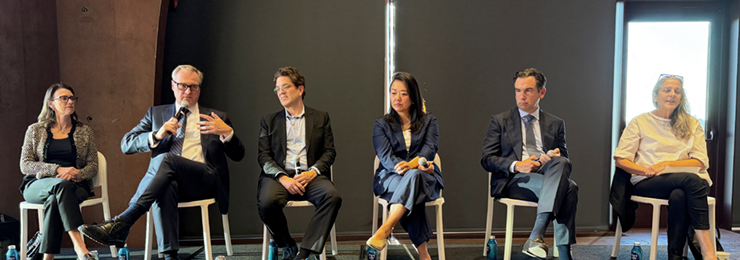
Lower Manhattan’s transformation since 9/11 and the challenges it faces in the years ahead was the subject of a panel discussion on Oct. 22, hosted by the Battery Park City Authority and moderated by its president and CEO, Raju Mann. The panel, which convened in the newly reconstructed Wagner Pavillion, included: Alice Blank, chair of Community Board 1; Edith Hsu-Chen, Executive Director of the Department of City Planning; Steve Fulop, President and CEO of the Partnership for New York; Jessica Lappin, President of Downtown Alliance; Jack Robbins, architect and former Director of Urban Design at FXCollaborative; and Tom Wright, President and CEO of the Regional Plan Association.
Below are excerpts from the discussion, edited for length.
What would you hope to see in Lower Manhattan in the next five to 10 years?
ALICE BLANK I’d love to believe that people like my daughter, who turns 28 today, could actually afford to live here. I think the question is not simply just how much housing we have, but also just how accessible it is. I’d hope to see a real commitment to the green infrastructure of the city, to the public realm on the street level. What are we walking by every day? A real commitment to resiliency works, but not resiliency works that aren’t incorporated into landscape. And I would love to believe that the privatization of the public spaces that we see often in our communities begins to be lessened. You find that you walk by wonderful old public buildings that are no longer public, and lobbies and the like. Should we really allow markets to become immersive experiences or ferry terminals to become private hotels? These are questions that I think should be answered.
JESSICA LAPPIN We don’t know how AI is going to disrupt things. In some ways now it’s being a driver of growth, of leasing, of companies all competing to get into the marketplace and beat each other out. But they’re not all going to succeed ultimately. We have to be very mindful of how AI may disrupt and create a boom and then a bust. We’re losing jobs to Texas, we’re losing jobs to other places. How are we growing our jobs here as we’re growing the number of residents here? Because part of the appeal of this neighborhood is walking to work or biking to work. So it’s a lovely ecosystem to create housing. But then have jobs people can walk to or bike to in close proximity.
When we try to think about the future, not in a moment of crisis, which forces everybody together, how do we get together to think about some of the shared goals on economic competitiveness, and housing affordability, and improvements to the public realm to solve 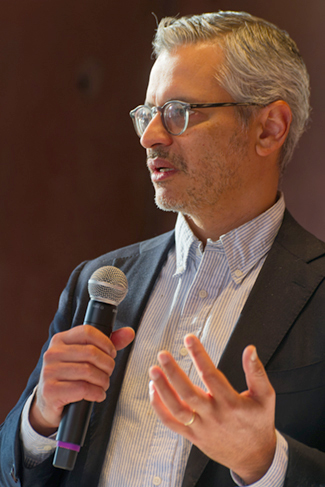 the problem?
TOM WRIGHT I think that the great change agent in the history of New York City DOT was Janette Sadik-Khan in the Bloomberg administration. The key thing she did was she made New York City streets beautiful. She allowed them to evolve. She would put in a bike lane with just some paint, and if it didn’t work out, they would take it out a few weeks later, and would experiment and try again. Because before Janette and her team came in, and I say this from experience, you could spend five years studying whether a bollard could go in one corner, and that would be the kind of thing that would make the business community and others get frustrated. Dynamism is important to cities and their success, and I think we have a lot of dynamism Downtown in our leadership, and we just need to make sure to leverage that.
STEVE FULOP Be flexible and willing to try things and to acknowledge this is not the final product. We will change it, allow communities that are less in tune with data, and architectural and planning drawings to actually see and feel what it feels like on the ground when they walk and they see these implementations.
From a planning and policy standpoint, how do we try to support job growth or at least job retention? And how do we think about competitiveness through a planning lens?
EDITH HSU-CHEN The diversity of people we bring to Lower Manhattan is so important. Making sure this area is vibrant, a great place to live, not just work. But the work piece is hugely important. Lower Manhattan is a premier central business district, and we want to keep it that way. There’s a lot of focus on that across the board from the public-private sector. That is something that everyone’s really keen on focusing on. The American Express headquarters focused a lot of attention on making sure they had created great public space. So every new project really does have to deliver great public realm.
As you look around Lower Manhattan, what do you feel are the opportunities we need to be grappling with to improve the quality of experience?
JACK ROBBINS I’ve made a list. It’s something like 25 different public agencies, city, state, and federal, that control the public realm in Lower Manhattan. How do you ever get any kind of cohesion with that many different agencies involved? The idea of a public realm czar makes a lot of sense. You need that kind of focus and energy and vision. And there ought to be an organization or a collection of organizations to come together to create a vision that people can get behind to help direct the investments that we’re already making and will continue to make.
 Thinking about our streets and public spaces and how they can shift to respond to different pressures and opportunities, what do you see as the secrets to successful collaboration or a successful outcome?
JESSICA LAPPIN I’m going to be honest about our frustrations with some of the beautiful spaces that we have today. The political environment on both sides of City Hall is incredibly pro-vending. And there are a lot of constraints on what the city can do with homelessness, but also the mayor has a new policy on encampments. I came here walking down lower Broadway, and it’s just tchotchkes, tchotchkes, tchotchkes, tchotchkesn, tchotchkes. Congested sidewalks with vendors. We have a beautiful, new-ish Elizabeth Berger Park, named after my predecessor, and you see ticket sellers in the park. You go to Peter Minuit Plaza by the Staten Island Ferry and you have homeless people with mattresses, shooting drugs, et cetera. So we have an issue with how some of our existing public realm spaces are not being policed or regulated, and so they’re not for the public. Alice talked about POPS (Privately Owned Public Space), but if you look at Zuccotti Park or the plaza at 140 Broadway, it’s vendors, vendors, vendors. So when we talk to DOT about a new initiative, I’m like, “Well, if we’re going to do this, is that just going to become one more place for vendors and homelessness?” We could be doing much better with what we have, setting aside the need for doing more.
EDITH HSU-CHEN I agree that enforcement is part of the solution, but I think frankly a bigger part of the solution is prevention and, in that, good design. We need spaces that are well designed, designed for everybody, and designed in a way where you’re maximizing best uses so that you’re minimizing the poor ones. For example, 60 Wall Street, the former Deutsche Bank that is being totally rehabbed. It has a large covered pedestrian space, a POPS that was really suffering. There was a lot of crime reported, the retail didn’t succeed in that covered pedestrian plaza. They had to close the public bathroom. It has a new owner and a new design for that covered pedestrian space. It’s a new opportunity to do better with the design.
ALICE BLANK I couldn’t disagree more on that particular space. I follow a lot of these public spaces pretty closely and I would just say in defense of 60 Wall, it was an iconic post-modern space that a lot of people actually gravitated to for just that reason. It did not require much work at all, and we spent a lot of time trying to indicate that to those involved, but alas, it did go under. I don’t always think green walls and, you know, fresh paint is necessarily the answer. Sometimes we have artifacts in our city, particularly in Lower Manhattan, that are so fabulous they need to be preserved. And that is part of the draw, of course, to this area.
How do we come together around certain places to imagine a better future?
STEVE FULOP I think government can play that role as long as it’s viewed as a convener, bringing everybody in early into the conversation. I actually think in many ways that government elected officials are the best conveners in this conversation. They have a unique ability to bring everybody to the table better than any other organization. And that’s how ultimately you get results. Government has the tools to address problems that others don’t. I think that government, whether it’s City Planning, the elected officials, the mayor, is the right starting point. Everyone else is a supporting cast along the way, important, but nevertheless, a supporting cast.
Around the region and in the city, what have you learned about taking some ideas and actually moving them forward?
TOM WRIGHT New York City has almost five million jobs. About a million of them are held by people who commute from outside the city. To people who thought, after COVID, business districts would go away, just the opposite happened. You still need proximity to these wealth generators, which is what Lower Manhattan is. It has enormous needs around that, and the regional connectivity is extremely important. Lower Manhattan has to deal with the challenges of transit accessibility and mobility. And clearly one of the biggest points of tension is on the streets, and the inability to manage the street network. And so that’s an area where I argue we need to start to be intentional. So what it comes back to is leadership and trying to make sure, not be afraid of change in Lower Manhattan, but embrace it and be ready for it, to fix things, and to fund the change.