
Big Bike Lane Additions Slated for Tribeca Starting Next Month

Starting next month, cyclists can claim more of Downtown’s asphalt as their own.
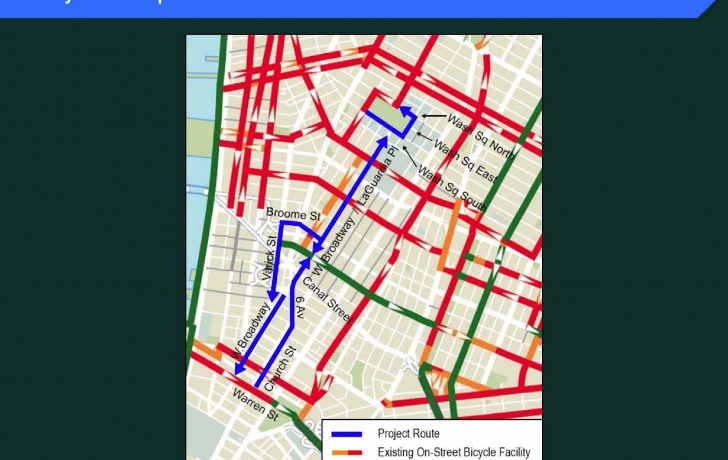
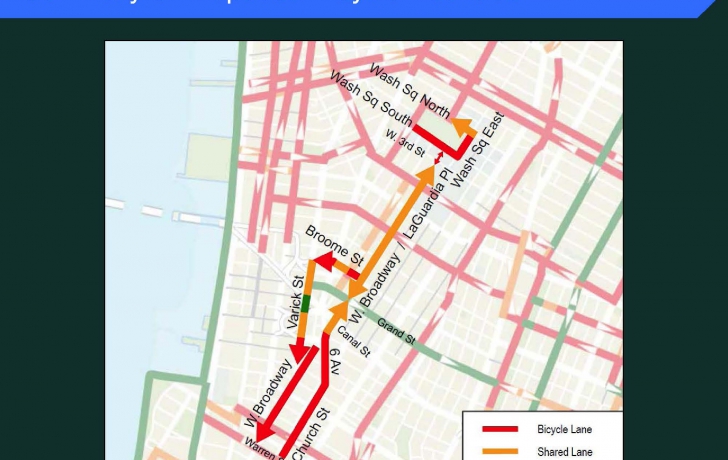
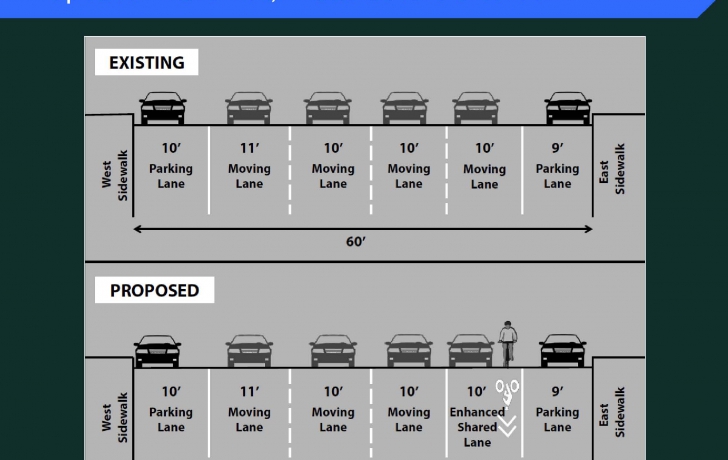
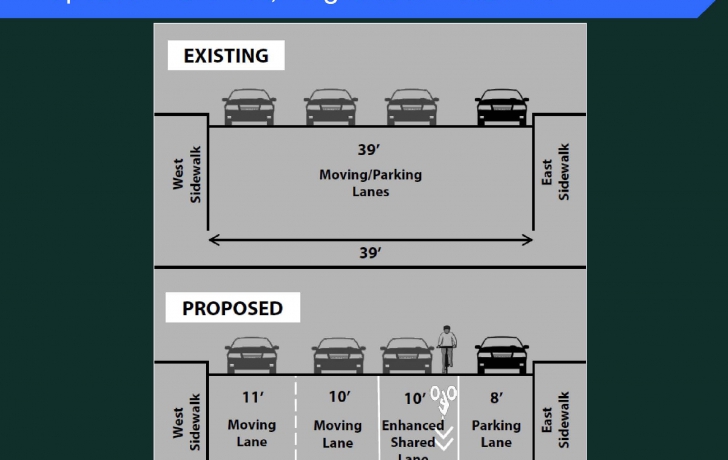
Following the May launch of the Citi Bike program, the city Department of Transportation plans to create bike lanes along busy Lower Manhattan streets: Church Street/Sixth Avenue, West Broadway and Varick Street. The aim is to give cyclists a continuous route between Warren Street and Union Square, Hayes Lord, director of the DOT’s bicycle program, told Community Board 1’s Tribeca Committee last week.
“Currently, there are already quite a number of cyclists that are using the various routes,” Lord said, “so we just want to formalize [it] and provide safe travel for them, as well as to encourage more people to use them.”
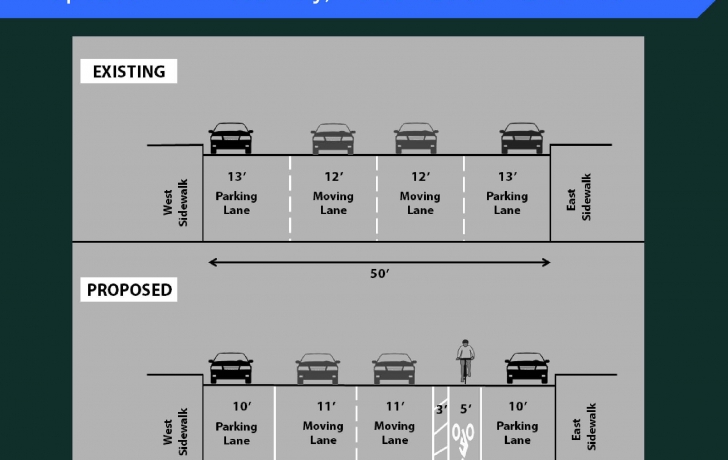
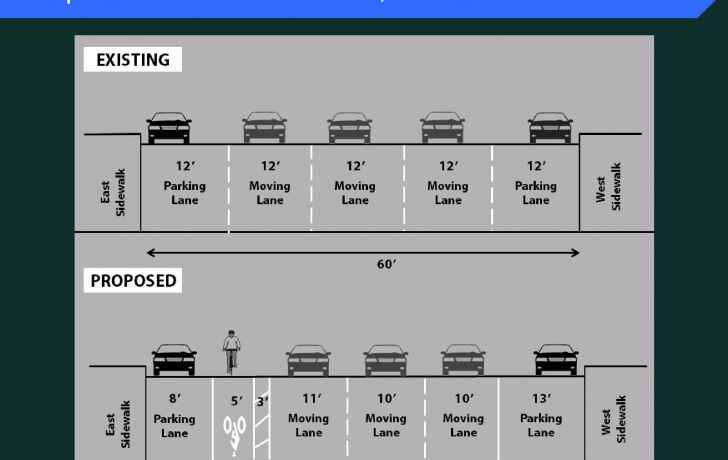
The new bike lanes, which will not close any traffic lanes or take away parking spaces, are also meant to “organize traffic where there is no organization,” Lord noted.
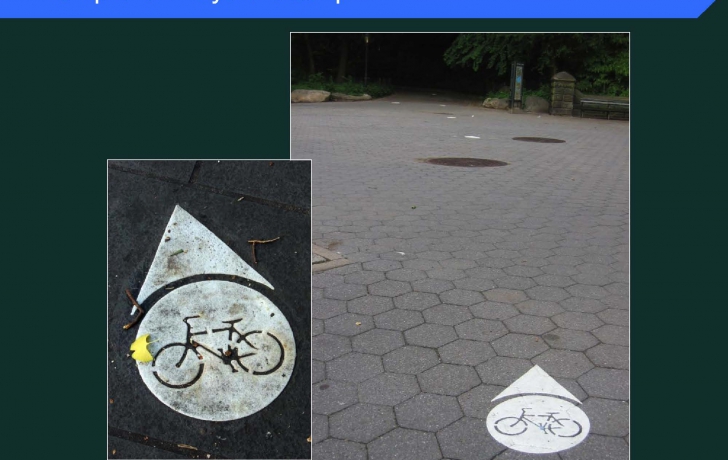
There will be two types of bike lanes. One will be a five-foot-wide, “buffered” path sandwiched between traffic and parking lanes and separated by three-foot wide painted street markings. The other, called “enhanced” lanes, will be shared with car lanes and designated as such with painted bike symbols.
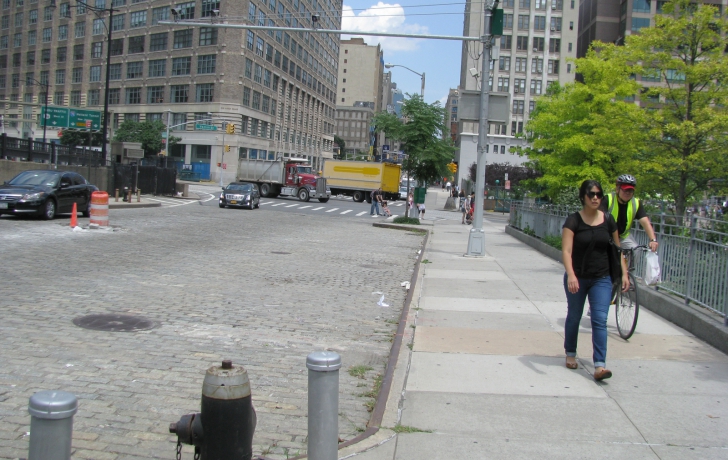
In an unusual move, the DOT is also considering allowing cyclists to ride on the sidewalk that borders Albert Capsouto Park, on Varick street between Canal and Laight streets. That will allow the bike riders to avoid the “very tricky” cobblestones along that block-long stretch, Lord said.
“It’s a wide sidewalk, and there’s low pedestrian volume,” Lord explained, adding that sidewalk markings and signs will tell the cyclists to yield to pedestrians.
Several committee members contended it would be inappropriate to designate the park’s sidewalk as a bike path. The committee’s resolution, passed 6-2, approved the overall plan but called the use of the sidewalk “unnecessary and potentially problematic.”
“You are now suggesting that the sidewalk be used by bikes and basically not pedestrians...I object to that,” said committee member Bruce Ehrmann, who voted against the committee’s resolution supporting the overall plan.
But cyclists who were later interviewed outside Capsouto Park voiced support for the proposal. Mark Johnston, who works nearby, was riding his bike on the sidewalk around noon—currently illegal—even though he had recently received a court summons for biking on a Lower East Side sidewalk.
“The [Varick Street] sidewalk was empty, so it was a logical choice,” he said.
“I think as long as it’s not a busy pedestrian sidewalk,” it’s doable,” Canal Street resident and cyclist Sally Ross said of the proposed policy. “They have it in Williamsburg like that, too, and it works.”
That same afternoon, a City College student was walking on the sidewalk beside Capsouto Park when a delivery man on a bike passed her on the right. Asked her opinion about the new bike lane, she was adamant.
“I think it’s unsafe for people that are walking,” said the woman, who asked not to be identified. “He really caught me by surprise. If I would have moved to the right or left, he could have hit me.”